Sir John Tavener (1944–2013)
A personal memory
The first encounter with John Tavener came at the age of eleven, as a chorister at Winchester Cathedral in a performance of Ultimos Ritos. Tall, dressed in white and commanding in presence, he moved through the nave, directing the singing of the many names of Jesus Christ in different languages. The music’s theatrical use of the cathedral was unforgettable. In 1987, the perspective shifted from chorister to conductor, with his Magnificat and Nunc dimittis at Evensong in King’s College Chapel, Cambridge. Tavener appeared unannounced and disappeared just as quietly — a striking contrast to the figure remembered from Winchester.
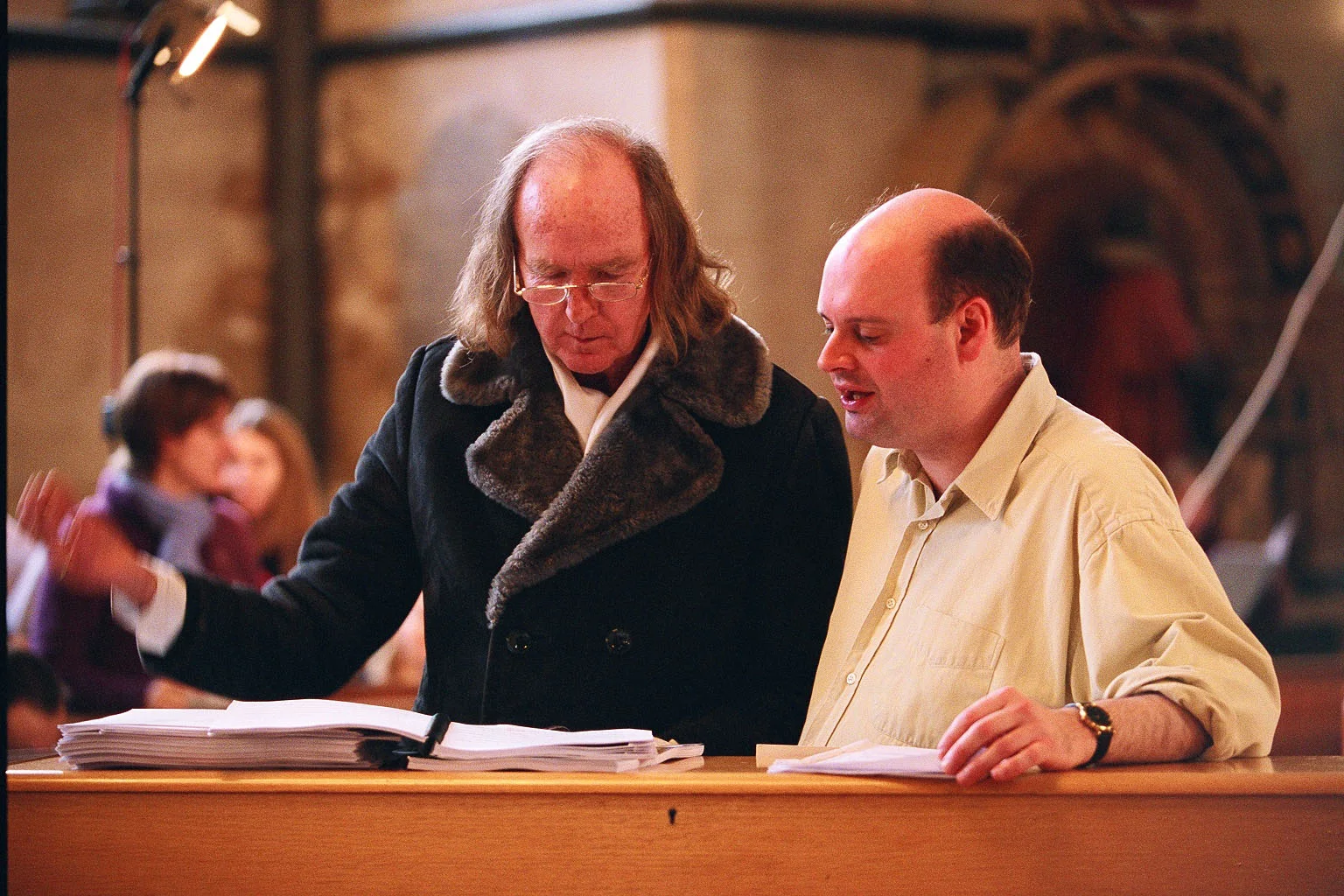
During preparations for The Veil of the Temple in 2002 and 2003, walks with Tavener and his dog Leila through the Dorset countryside brought conversations about Fritz Schuon, Sufism and the spiritual connections between religions. The practical challenges of bringing his enormous score to life were never far away, yet Tavener was remarkably open about its realisation, allowing considerable freedom in shaping the performance.
The Veil of the Temple
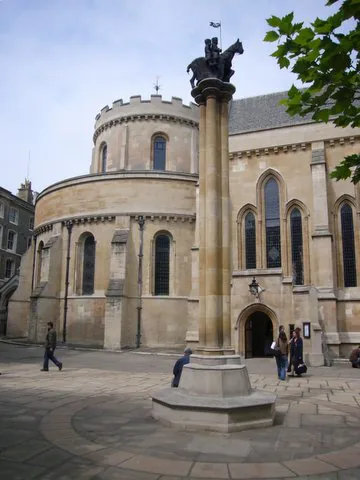
In 2000, Tavener met Robin Griffith-Jones, Master of the Temple Church, and Stephen Layton, its then Director of Music and Organist, to discuss a major new commission. Tavener recalled how churches around the first millennium had been filled with chanting throughout the night. This observation became the starting point for The Veil of the Temple, which the composer subsequently described as the most important work of his life.
The result was an all-night musical vigil lasting approximately seven hours, bringing together Christian and other sacred traditions. Its extended structure, chant-like writing and gradual transformations reflected Tavener's growing interest in the spiritual connections between different faiths. The theatrical use of sacred space that had characterised earlier works such as Ultimos Ritos now found expression on a much larger and more contemplative scale.
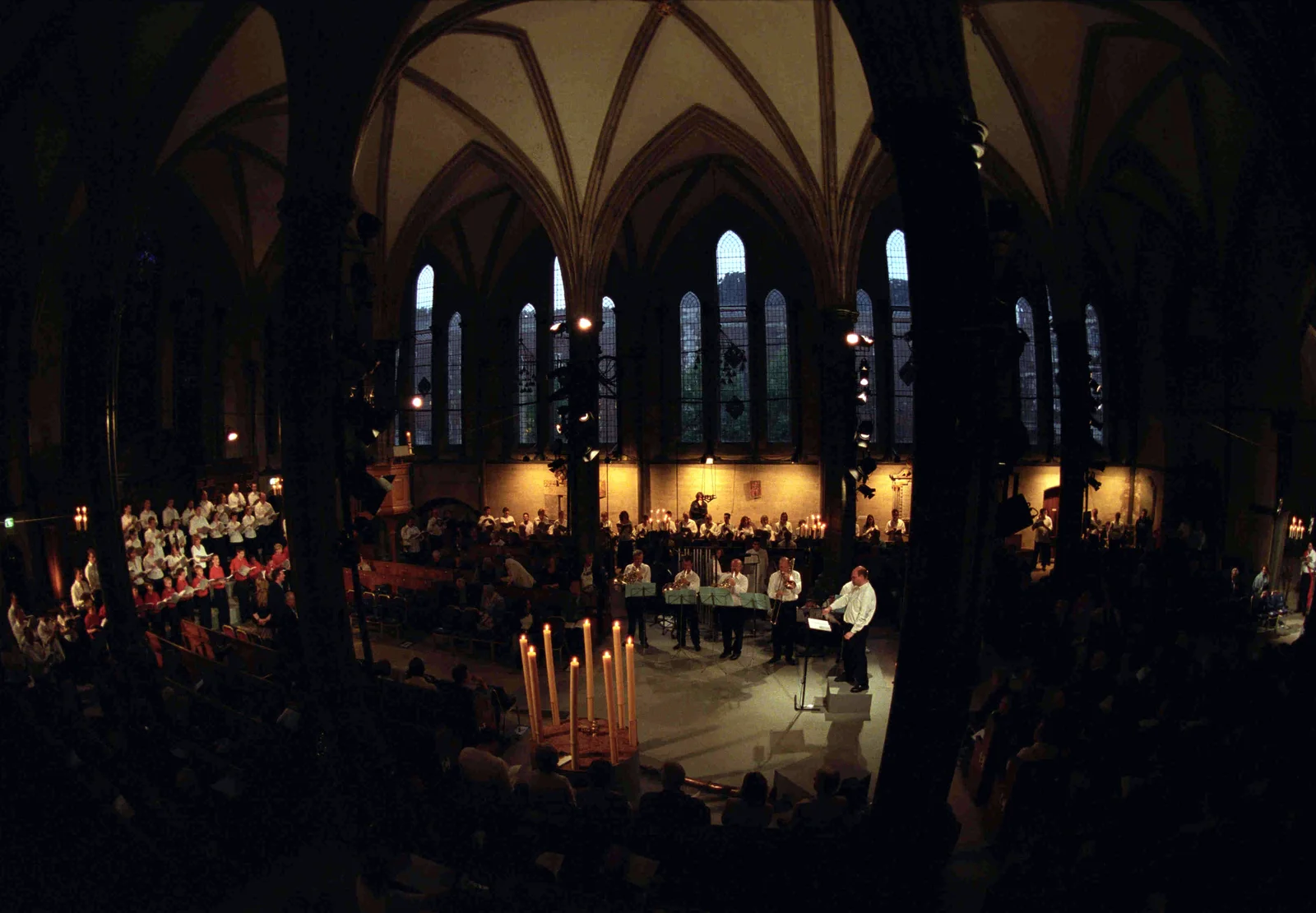
The architecture of the Temple Church was integral to the conception. Singers occupied different parts of the building and moved as the music unfolded, allowing the sound to travel through the church and drawing the audience into the experience. Rather than a conventional sequence of movements, the work became a continuous musical ritual in which space, time and sound were inseparable.
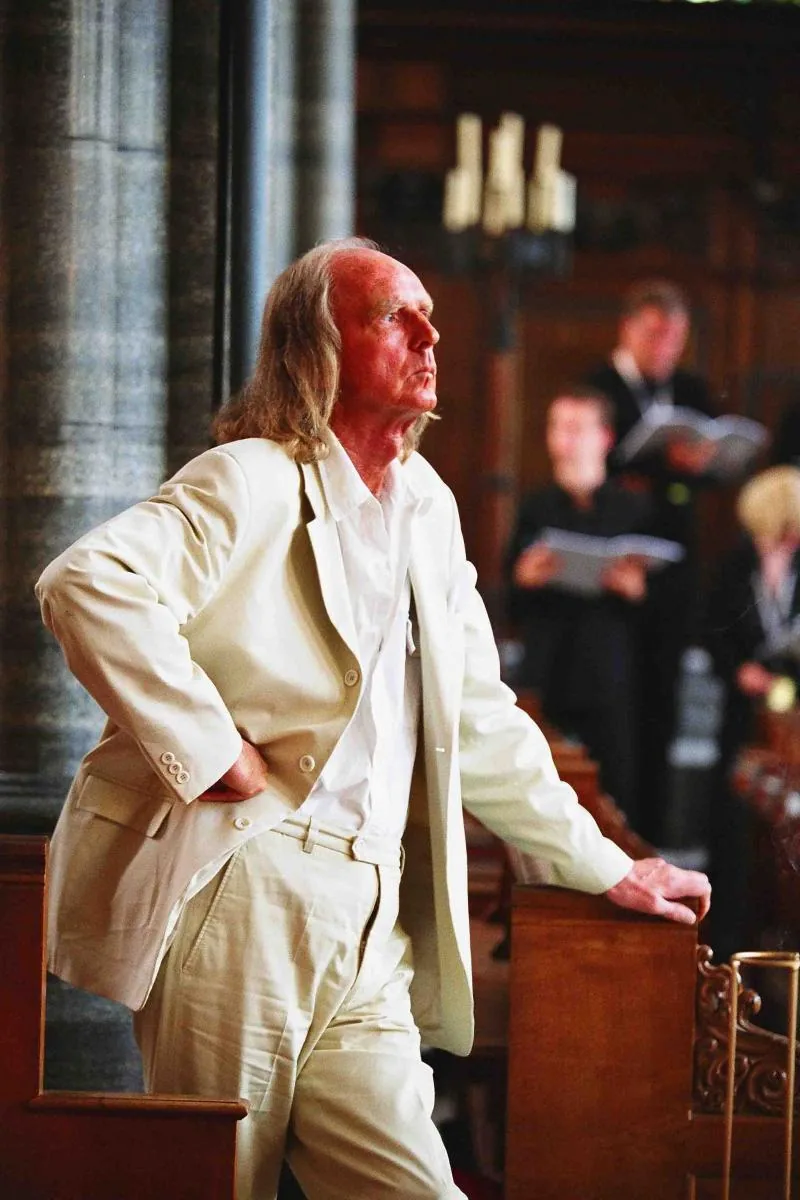
The complete Veil of the Temple received its world premiere at the Temple Church on 27 June 2003, with a second all-night performance on 4 July. Layton devised an elaborate performance plan, extending to 274 pages, to coordinate the positions and movements of the singers. The performances involved the Choir of the Temple Church, the Holst Singers, soprano Patricia Rozario and members of the English Chamber Orchestra. Audiences filled the church, while others followed the proceedings on screens in the surrounding precincts.
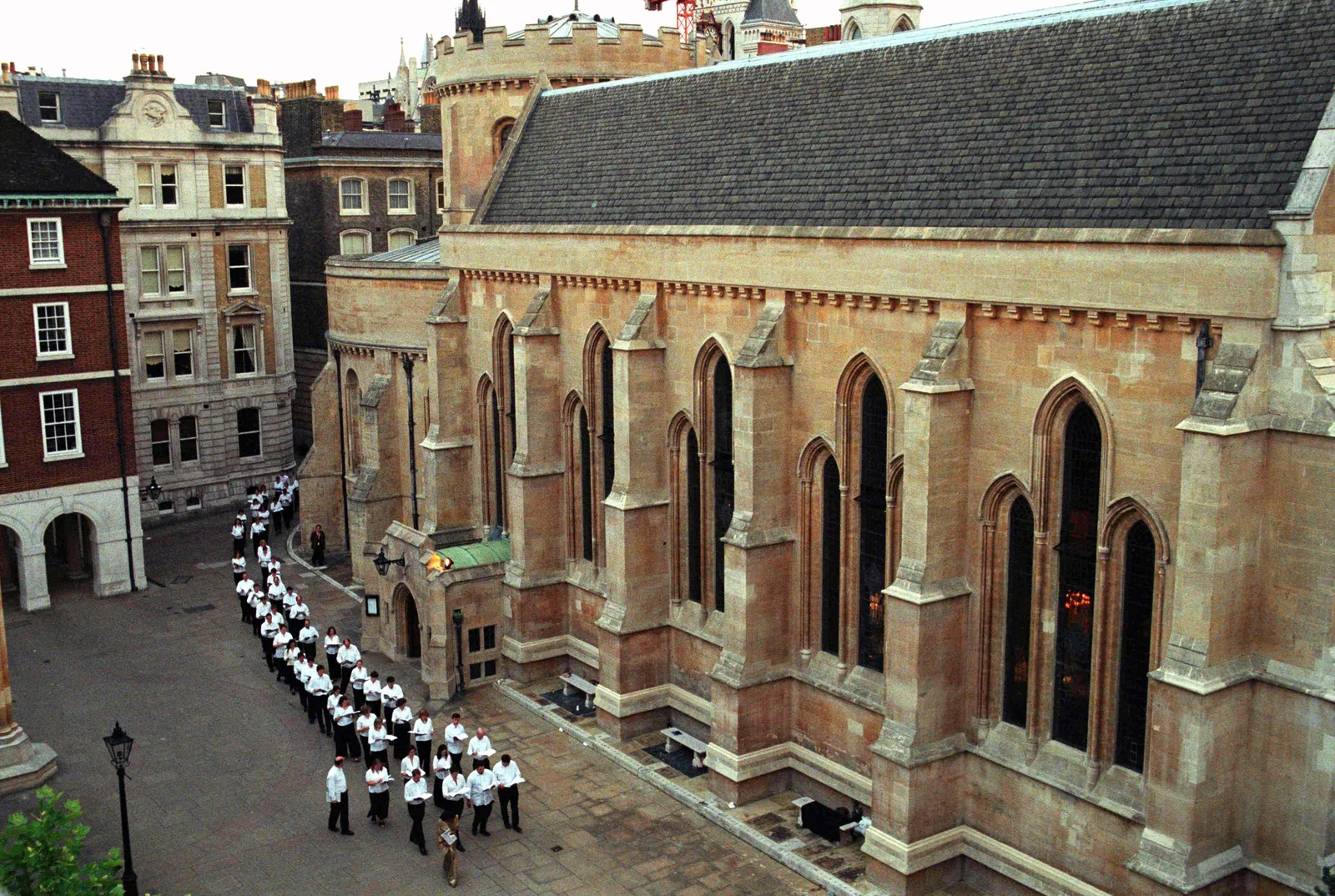
As the first vigil ended at around 5.30 on a June morning, Tavener and Layton emerged from the church with the singers and audience, accompanied by the mingling sounds of a Christian hymn and a Hindu chant. The passage from the enclosed sacred space into the daylight gave a particularly direct expression to the spiritual vision underlying the work.
Concerts and recordings
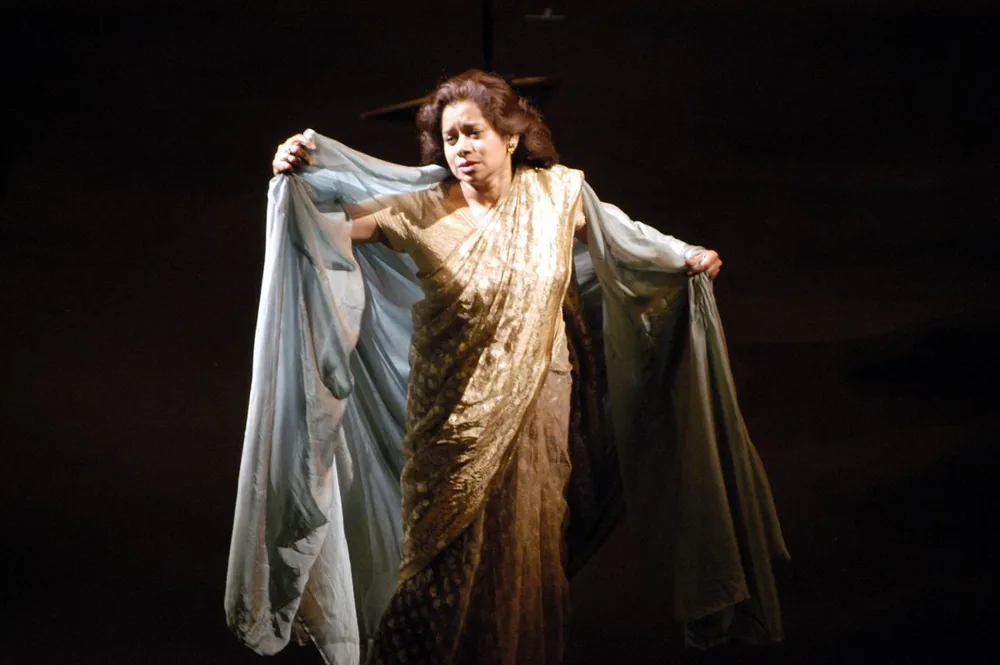
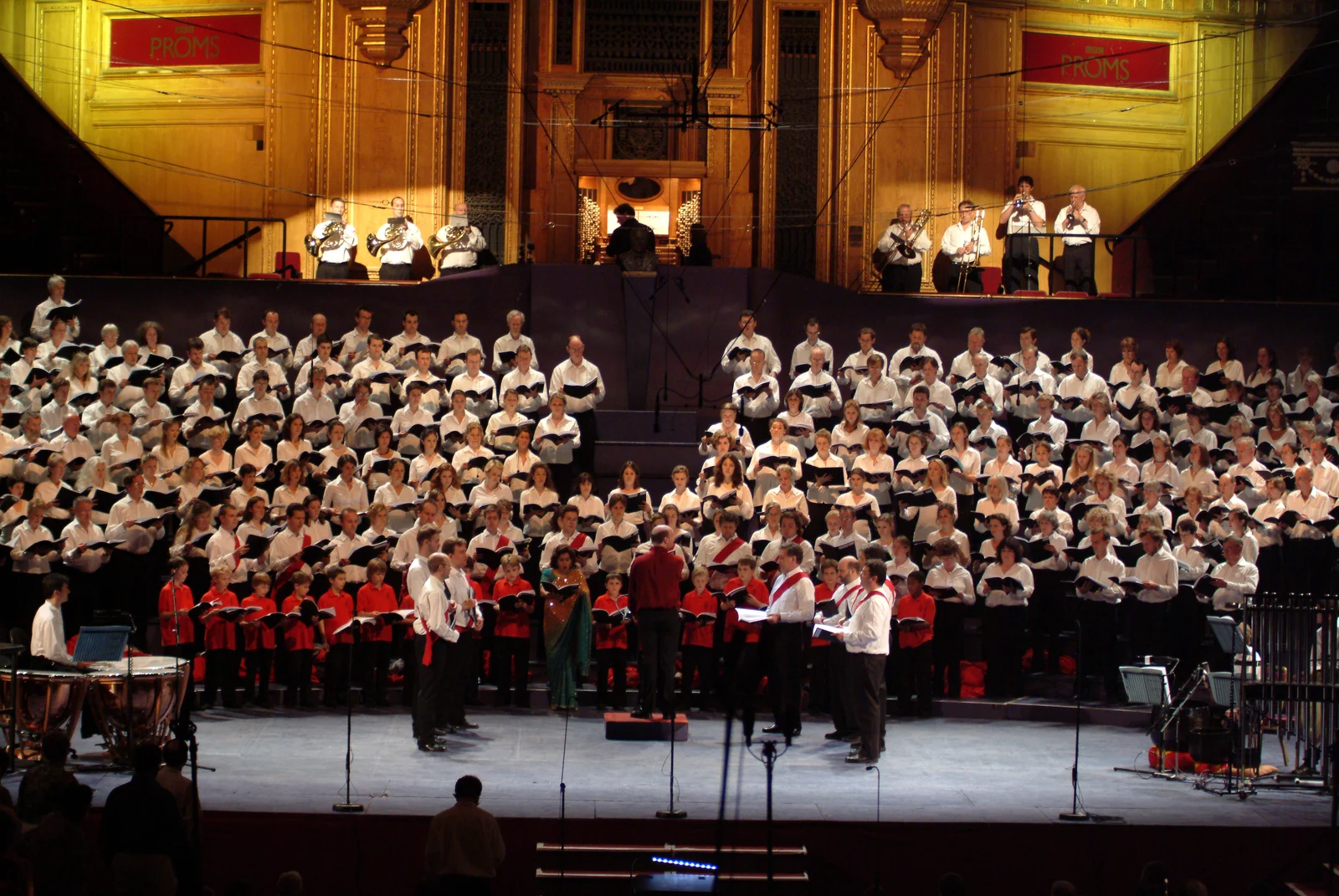
The complete work subsequently received its American premiere at Avery Fisher Hall, Lincoln Center, New York, on 24 July 2004. An abridged concert version was performed at the BBC Proms in the Royal Albert Hall on 1 August 2004, bringing the music to an audience and setting very different from those of the original Temple Church performances.
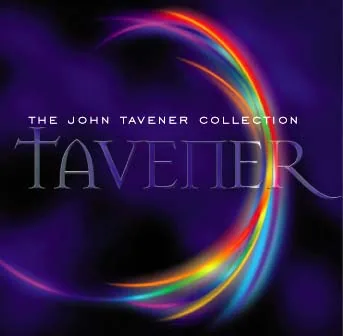
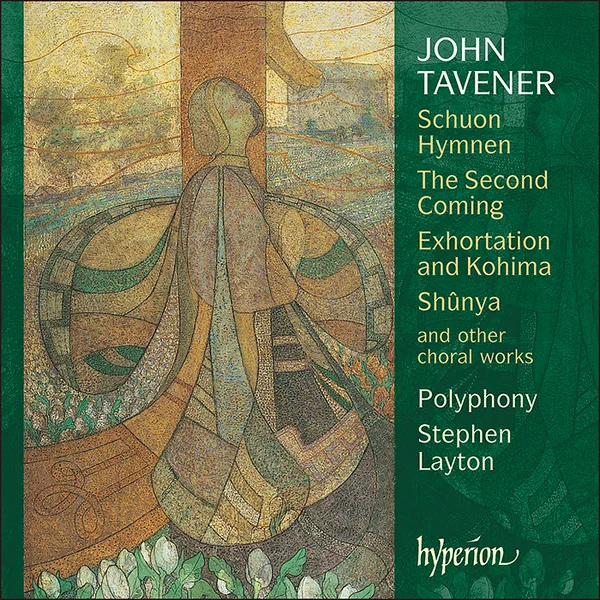
Layton's recordings of Tavener's music include The John Tavener Collection for Decca (2003) and John Tavener: Choral Music with Polyphony for Hyperion (2004). The latter featured Butterfly Dreams, Schuon Hymnen and Shûnya, works reflecting the composer's exploration of spiritual traditions beyond his earlier Orthodox influences.
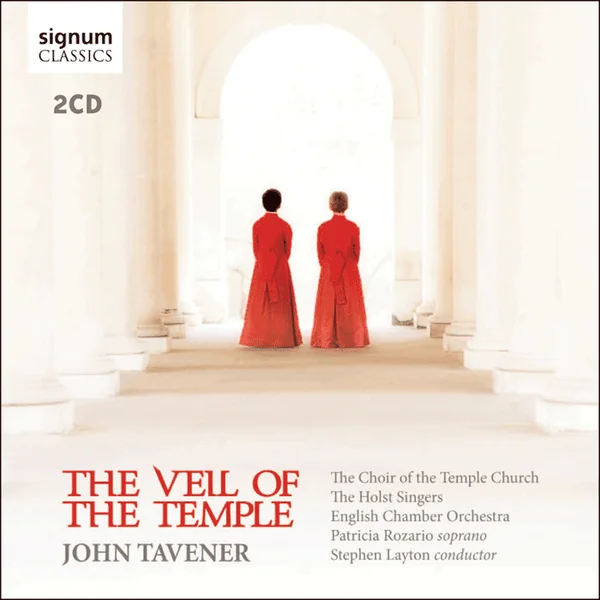
A live recording of The Veil of the Temple was released by RCA in 2005 and reissued by Signum Classics in 2014.
The final collaboration
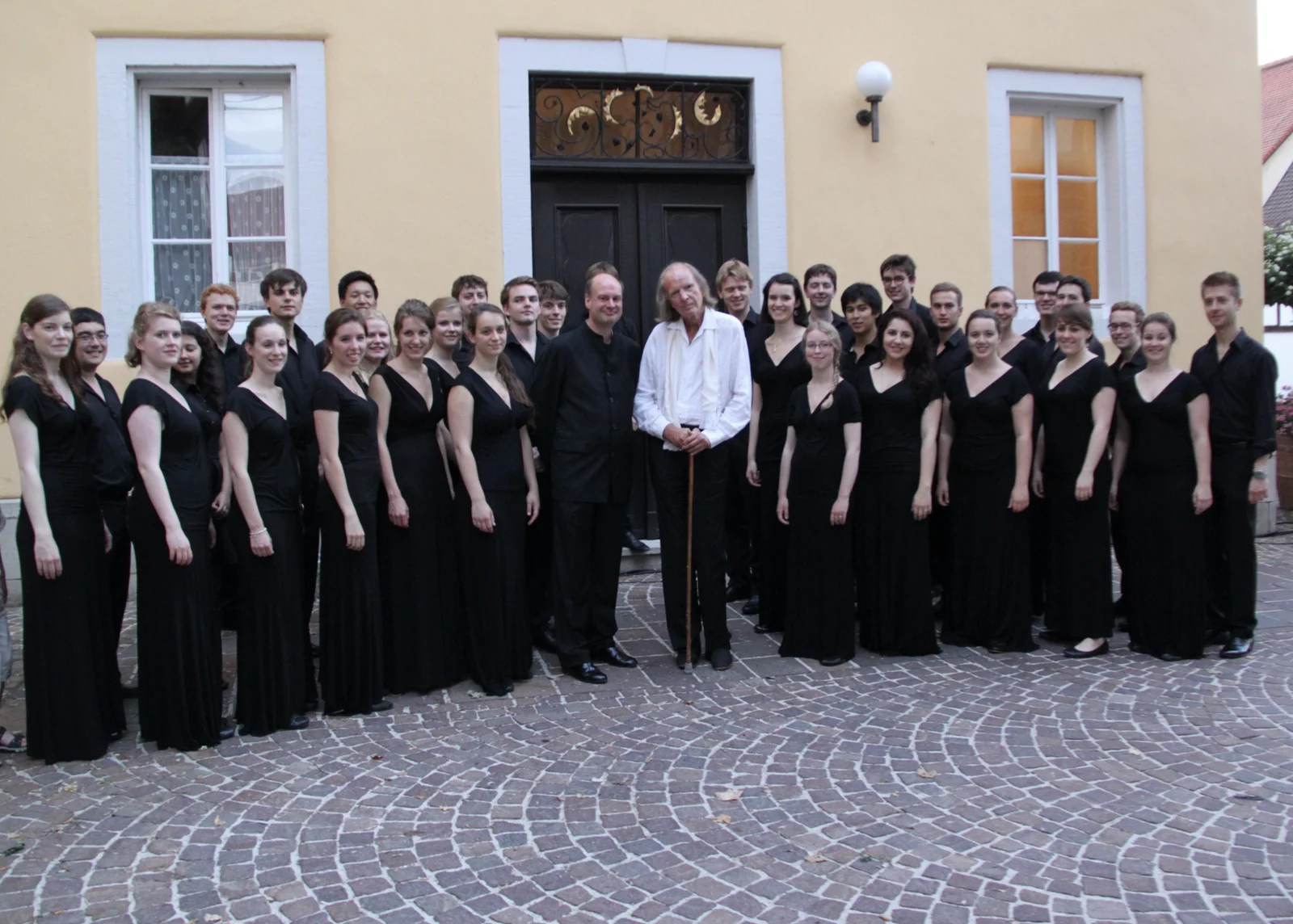
On 25 July 2013, Tavener attended a concert by the Choir of Trinity College Cambridge, conducted by Layton, at the European Festival of Church Music in Schwäbisch Gmünd, Germany. The occasion marked the presentation of the European Church Music Prize to Tavener and included performances of Funeral Ikos and Song for Athene. It was among his final public appearances and his last collaboration with Layton.
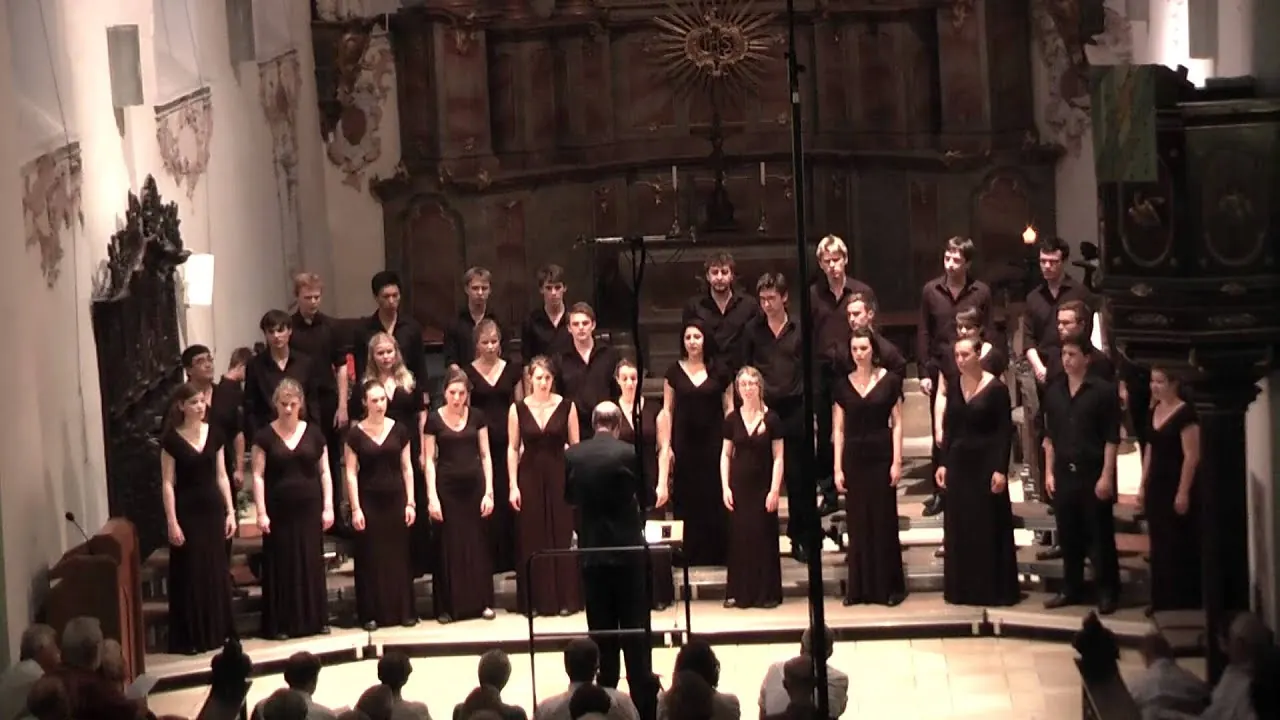
This film is hosted on YouTube. Playing it here connects to YouTube, which may set cookies (see our privacy notice).
The Choir of Trinity College Cambridge, Schwäbisch Gmünd, July 2013
Following Tavener's death in November 2013, a service of thanksgiving was held at Westminster Abbey on 11 June 2014. Layton conducted the Britten Sinfonia in Mother of God, here I stand, from The Veil of the Temple.